
26. Great Restraint
Great Restraint is hexagram 26 of the 64 in the I Ching, also known as the Book of Changes (in Chinese Dà Chù, 大畜).
Also known as: Taming Power of the Great, Restraint, great.
Great force is not loosed here, but gathered until it is worthy of a direction.
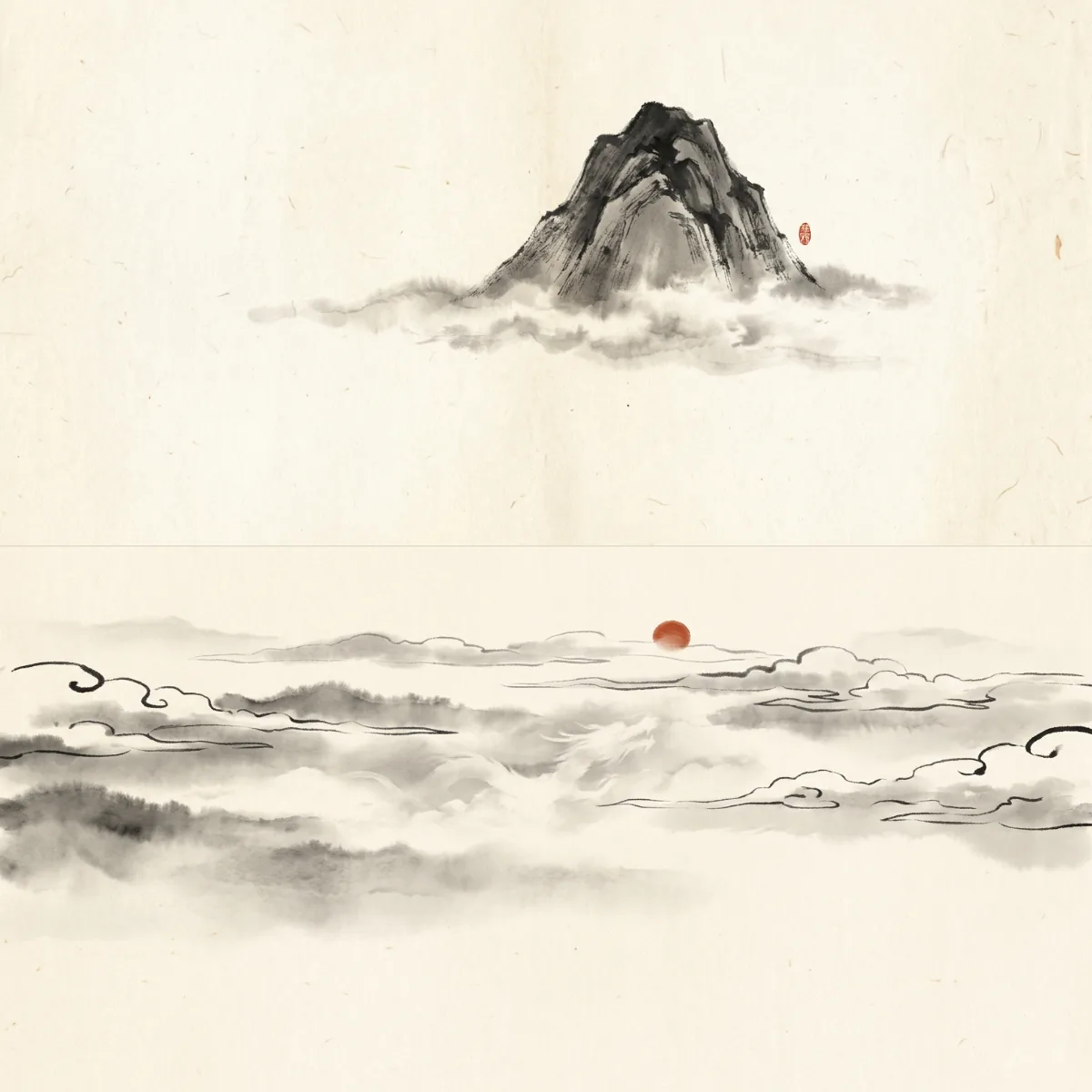 26. Great Restraint大畜 · Dà ChùGreat force is not loosed here, but gathered until it is worthy of a direction.
Hexagram 26 (Great Restraint) often shows up around holding my power back, waiting for the right moment or storing energy instead of spending it. At its core: Great force is not loosed here, but gathered until it is worthy of a direction.
Where this hexagram often fits.
Situations
- holding my power back
- waiting for the right moment
- storing energy instead of spending it
- frustrated that I can't act yet
- preparing for something big
- building up reserves
- keeping discipline without seeing results
- having potential but not unleashing it
Questions people ask
- How do I hold my power until the right moment?
- Why do I have to restrain myself right now?
- How do I bear the pressure of what I can't do yet?
- What should I cultivate before I act big?
What is often at play
- pent-up energy
- frustration
- impatience
- tension
What this asks for
- patience
- discipline without resentment
- gather and mature
- conserve your strength
Also searched as
- Taming Power of the Great
- Great Restraint
- Reserve Strength
- Mature Power
- Discipline
- Cultivation
- Containment
Core image
This hexagram shows great force held under deliberate restraint. It is not a small correction, but the holding-in of something powerful until it grows clean and usable. The image is heavy: mountain over sky. What is large is not denied here, but kept.
Tension
The tension lies in the pressure that builds when so much force may not yet break out. That can frustrate, harden, or overheat. Yet this braking is not aimed against the force. It is exactly what saves it from being squandered.
Distortion
Great restraint distorts when one either lets go too early, or holds in so long that the force turns bitter. Then control begins to work against life. The art is not to subdue, but to ripen.
Stance
Bear the weight of stored force. Gather, practice, order, and feed what must later act greatly. Not everything powerful is already ready for its moment. Real greatness can stand preparation.
Closing line
What wants to carry the great must first learn to hold itself.
Plain-language entrances.
Plain-language entrances to this hexagram. They help with search and recognition, while the reading itself remains rooted in the text and your question.
Hexagram 26 - Great Restraint
Hexagram 26 - Great Restraint gives language to a recognisable I Ching pattern. Read the linked hexagram as the source, not as a separate interpretation.
Changing lines of hexagram 26
- Line 1. At the start the force is still too wild for free movement. That is no humiliation, but protection. What is taken back now spares greater harm later.
- Line 2. Here the braking is felt more sharply. The movement is already nearer to breaking out, yet is still held. That asks for discipline without resentment.
- Line 3. At this point the great force can begin to practice in shape. It is not full discharge yet, but a fertile preparation. That makes this line full of promise.
- Line 4. This line shows how much harm is spared when one sets a limit early and wisely. What is large need not first turn wild to be taken seriously. Discipline carries forward.
- Line 5. Here forceful restraint turns supple and skilled. Not through brute pressure, but through the right center. So the stored power stays usable.
- Line 6. When the great force may finally pass through, it comes not as an eruption but as an opened passage. That is the sign that the taming has succeeded. The gate opens because the load has found its measure.
The form beneath hexagram 26
Derived from the structure of the I Ching — not an interpretation, but the shape underneath it. The reading above remains the source.
- Balance. Hexagram 26 is predominantly yang — 4 yang lines and 2 yin lines.
- Line pattern. From bottom to top: yang, yang, yang, yin, yin, yang.
- Movement. 63 possible paths of change run from this image — every combination of moving lines leads to a different hexagram.
Built from
Hexagram 26 is built from two trigrams, the natural forces of the I Ching.
Related hexagrams
Sources & reading
Our text is our own, ratified reading of the canonical I Ching — source → human → pattern → fitting movement. It is not a reproduction of the translations above, and not prediction, psychology, or new-age. The reference translations serve to calibrate; protected prose is not taken over.
- Richard Wilhelm / Cary F. Baynes — The I Ching or Book of Changes. symbolic-philosophical, with the Ten Wings — the most influential Western edition.
- James Legge — The Yî King (Sacred Books of the East). scholarly-philological (public domain).
Read what is in motion in your situation.
A hexagram only takes on meaning in relation to your own question. Ask one and read what appears.