
Hexagram 29 - Abyss
A source-linked hexagram entry in the I Ching Atlas.
How to read this entry
Read as a source-linked field of change, not as a prediction.
This Atlas page helps orientation. The real reading still begins with the text and your own question.
Source reading and stance
Core image
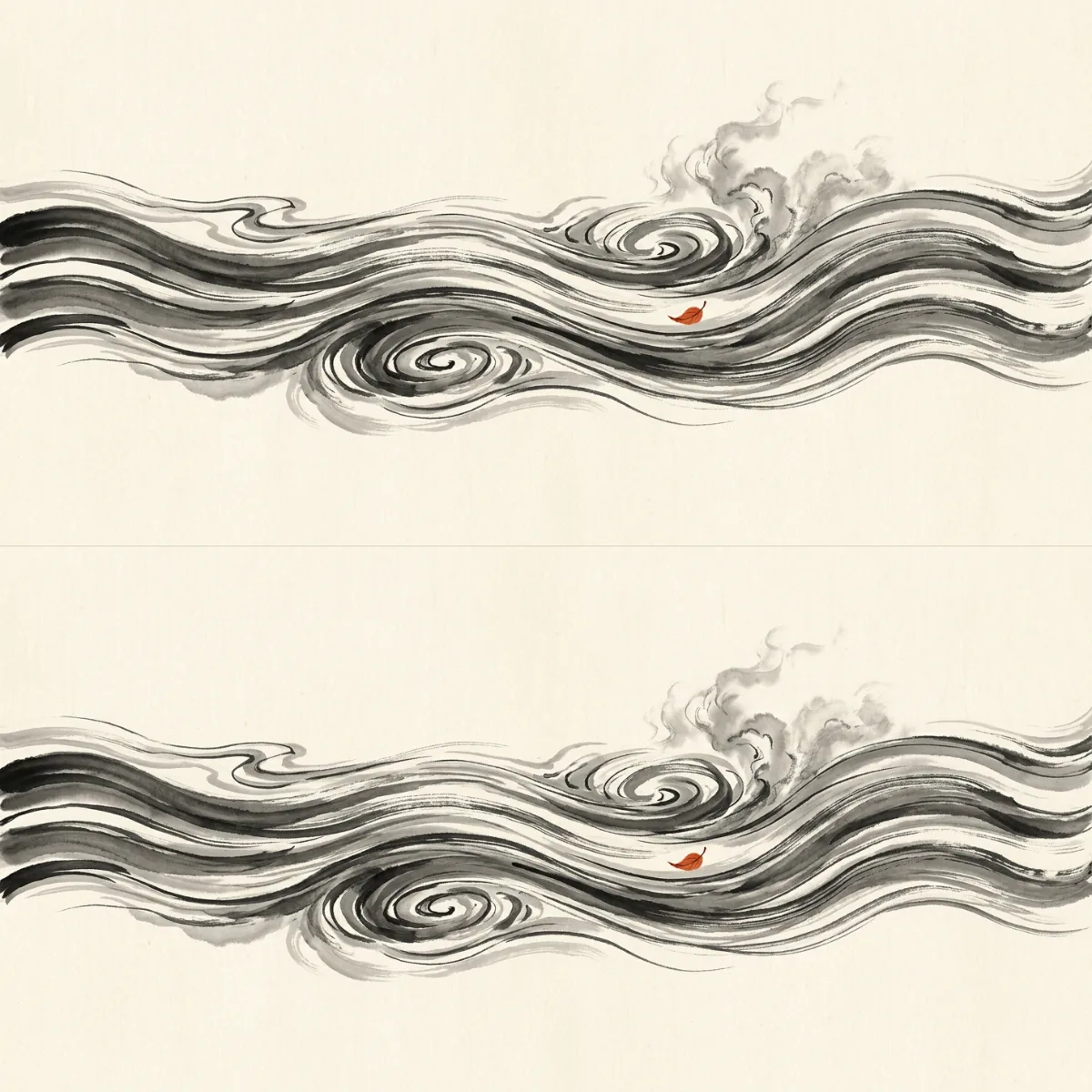
This hexagram is water within water: depth, repetition, danger. You are not standing at the edge of the risk but inside it. The situation hides pits, currents, and drops you cannot see. So it asks for no heroics, only fidelity to whatever stays right in each single step.
Tension
The hard thing here is that the danger does not come once. It returns, or turns out to run deeper than you thought. That wears on the nerves and tempts two wrong moves: clenching or recklessness. One freezes at the edge; the other jumps because standing still has become unbearable.
Distortion
The abyss distorts when someone dramatizes the danger or denies it. Then depth becomes a story about who you are, or a problem you mean to beat by sheer will. Either way, you lose touch with the actual current.
Stance
Stay simple, exact, and steady. Look for no grand answer; look for the right next step. Stay in contact with the depth without disappearing into it. Whoever moves cleanly here finds that danger can also be a school.
Closing line
It is not the strongest who get through here, but the one who never comes loose from themselves.
Where this hexagram often appears.
These fields are addresses toward the source reading, not separate meanings.
Situations
- stuck in danger
- one risk after another
- down in a deep low
- not knowing how deep it goes
- torn between freezing and acting recklessly
- falling into the same trap again
- in emotionally deep water
- getting through a dangerous stretch
Questions
- How do I get out of this low one step at a time?
- Why do I keep ending up in the same danger?
- How do I stay myself through a dangerous period?
- What is the right next step here without forcing it?
What often plays here
- fear
- freezing up
- recklessness
- exhaustion from repeated danger
What this asks
- the right next step
- precision over bravado
- stay in contact with the depth
- simplicity
Plain-language entrances.
Hexagram 29 - Abyss
Hexagram 29 - Abyss gives language to a recognisable I Ching pattern. Read the linked hexagram as the source, not as a separate interpretation.
Changing lines of hexagram 29
- Line 1. At the start the danger is still either underrated or blown up. Both are impure. See where you actually stand before you say anything about the depth.
- Line 2. Here, in the middle of the risk, a passable line still runs. Not wide, not comfortable, but enough. Trust accuracy, not nerve.
- Line 3. This line shows the danger doubled. What was already unstable grows more tangled still. Just now the urge to force something has to be refused.
- Line 4. At this point no grand gesture helps anymore; only plainness. Take what is offered and do not overplay your hand. Simplicity can save you here, quite literally.
- Line 5. This is depth without panic. The danger has not gone, but the movement through it grows cleaner. Hold the center now and you no longer have to prove your strength against the current.
- Line 6. When one lives in danger too long without an inner compass, it closes like a cage. Then risk becomes a way of life instead of a passage. A hard interruption is needed here.
Canonical relations
Related doors
Related context
From context to practice
This Atlas page helps orientation. Place this field beside your own question or saved readings when you want to see what it does in your situation.
Source status
This entry is Atlas context. It points back to the source instead of becoming a separate teaching.
View source anchor
Source: corpus:hexagram/29
Claim: derived - Review: validated - Policy: derived-atlas-projection