
58. Joy
Joy is hexagram 58 of the 64 in the I Ching, also known as the Book of Changes (in Chinese Duì, 兌).
Also known as: The Joyous.
Real openness lightens, but loses its truth the moment it has to force good cheer.
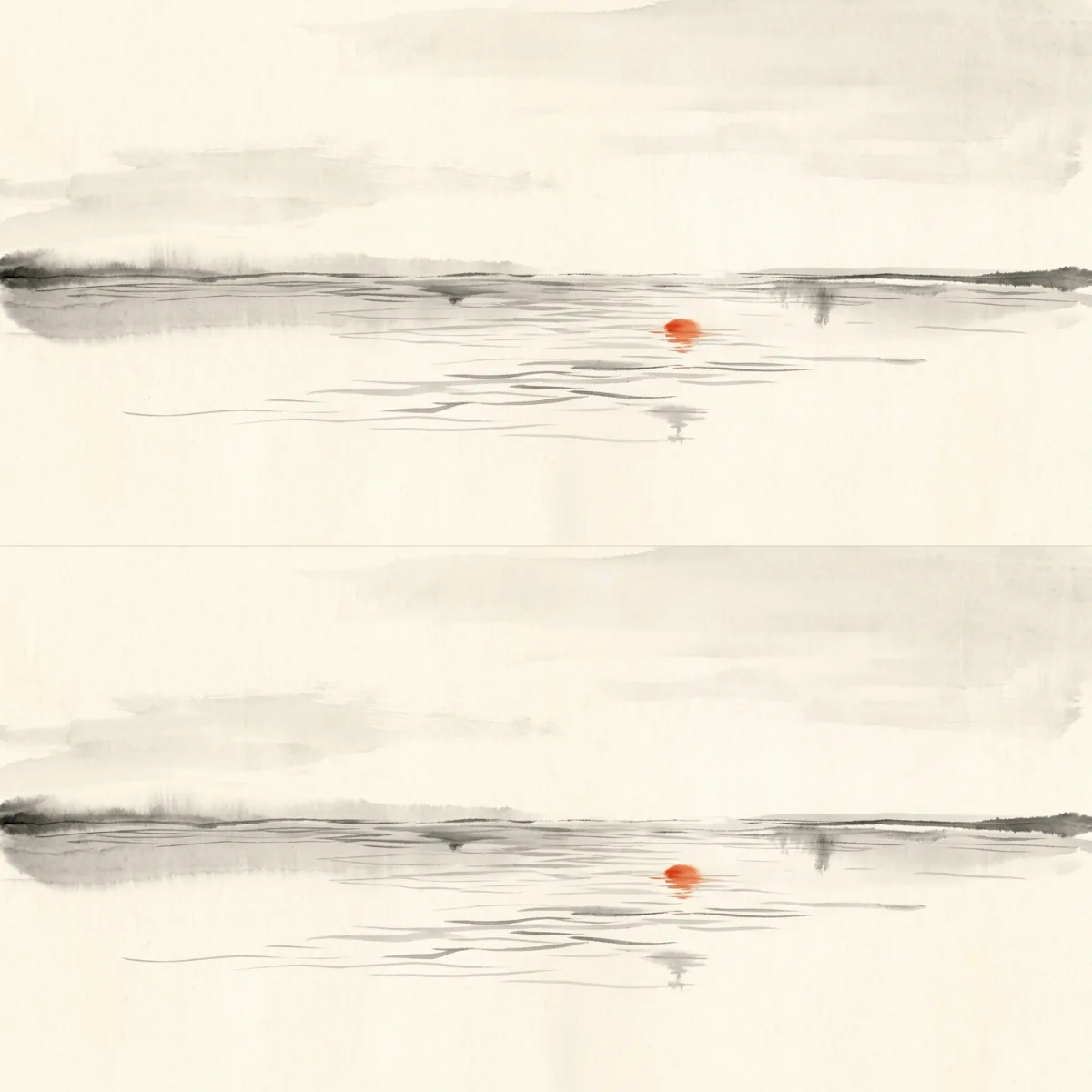 58. Joy兌 · DuìReal openness lightens, but loses its truth the moment it has to force good cheer.
Hexagram 58 (Joy) often shows up around seeking real connection instead of small talk, noticing that laughter covers the seriousness or feeling open after something heavy. At its core: Real openness lightens, but loses its truth the moment it has to force good cheer.
Where this hexagram often fits.
Situations
- seeking real connection instead of small talk
- noticing that laughter covers the seriousness
- feeling open after something heavy
- a good conversation that lets you breathe
- forcing cheer when it doesn't feel real
- being able to exhale after tension
- people-pleasing to stay liked
- sharing joy that feels genuine
Questions people ask
- Is this joy real or performed?
- How do I make room for genuine contact?
- Why does socializing sometimes feel so empty?
- How do I share joy without losing myself?
What is often at play
- joy
- relief
- people-pleasing
- need for connection
What this asks for
- allowing real openness
- not forcing a tone
- not making joy a duty
- not waving away seriousness with lightness
Also searched as
- The Joyous
- Joy
- Openness
- Relief
- Lightness
- Resonance
- Exchange
Core image
This hexagram is open water more than a party: a surface that has stopped clenching and can now be approached. Something becomes reachable, answerable, less frozen. The lightness it carries is real, but it comes from contact, not from amusement. What matters here is resonance — that things meet and exchange — not simply that they please.
Tension
The tension sits between true gladness and social shine. You can laugh, invite, and connect a great deal without any real openness arising. A room can stay bright while nothing actually passes between people. This hexagram asks for a joy that isn't staged, one that comes from honest contact rather than performance.
Distortion
Joy goes wrong when openness slides into wanting to please, or when warmth is used to dodge what's serious. Then the mood stays light while the ground underneath turns false. What was meant to open instead quietly covers over.
Stance
Make room where words and presence can actually breathe. Don't force a tone, and don't turn joy into a duty. Right openness frees without spilling into excess, and connects without sweetening anything. Let the gladness be plain enough to trust.
Closing line
Where the heart is truly open, the smile needs no direction.
Plain-language entrances.
Plain-language entrances to this hexagram. They help with search and recognition, while the reading itself remains rooted in the text and your question.
Hexagram 58 - Joy
Hexagram 58 - Joy gives language to a recognisable I Ching pattern. Read the linked hexagram as the source, not as a separate interpretation.
Changing lines of hexagram 58
- Line 1. At the start the openness is small and unadorned, and that is good — as long as you don't reach for the room's approval. Real lightness usually begins with no audience at all. Let it stay quiet before it is seen.
- Line 2. Here is a gladness that needs no charm or decoration to stand. Because of that, the exchange becomes reliable. What is true has no need to shine extra to be believed.
- Line 3. At this point openness starts leaning on stimulation, attention, or outside approval. The gladness is already less free than it looks. This line warns against entertainment standing in for contact.
- Line 4. Here you waver between real openness and the pull of easy surface. It leaves you unsettled inside. The line asks you to choose what clarifies over what merely feels pleasant.
- Line 5. This line holds trust in the midst of openness. You needn't suspect every contact, nor treat every smile as sacred. That sober openness is exactly what makes the gladness last.
- Line 6. When you set out to win others over with charm, or lose yourself in seductive openness, the hexagram turns. Joy becomes bait. This line is hard on any openness without truth beneath it.
The form beneath hexagram 58
Derived from the structure of the I Ching — not an interpretation, but the shape underneath it. The reading above remains the source.
- Balance. Hexagram 58 is predominantly yang — 4 yang lines and 2 yin lines.
- Line pattern. From bottom to top: yang, yang, yin, yang, yang, yin.
- Movement. 63 possible paths of change run from this image — every combination of moving lines leads to a different hexagram.
Built from
Hexagram 58 is built from two trigrams, the natural forces of the I Ching.
Related hexagrams
Sources & reading
Our text is our own, ratified reading of the canonical I Ching — source → human → pattern → fitting movement. It is not a reproduction of the translations above, and not prediction, psychology, or new-age. The reference translations serve to calibrate; protected prose is not taken over.
- Richard Wilhelm / Cary F. Baynes — The I Ching or Book of Changes. symbolic-philosophical, with the Ten Wings — the most influential Western edition.
- James Legge — The Yî King (Sacred Books of the East). scholarly-philological (public domain).
Read what is in motion in your situation.
A hexagram only takes on meaning in relation to your own question. Ask one and read what appears.