
57. Gentleness
Gentleness is hexagram 57 of the 64 in the I Ching, also known as the Book of Changes (in Chinese Xùn, 巽).
Also known as: The Gentle.
What truly penetrates here does so not by force, but by sustained gentleness.
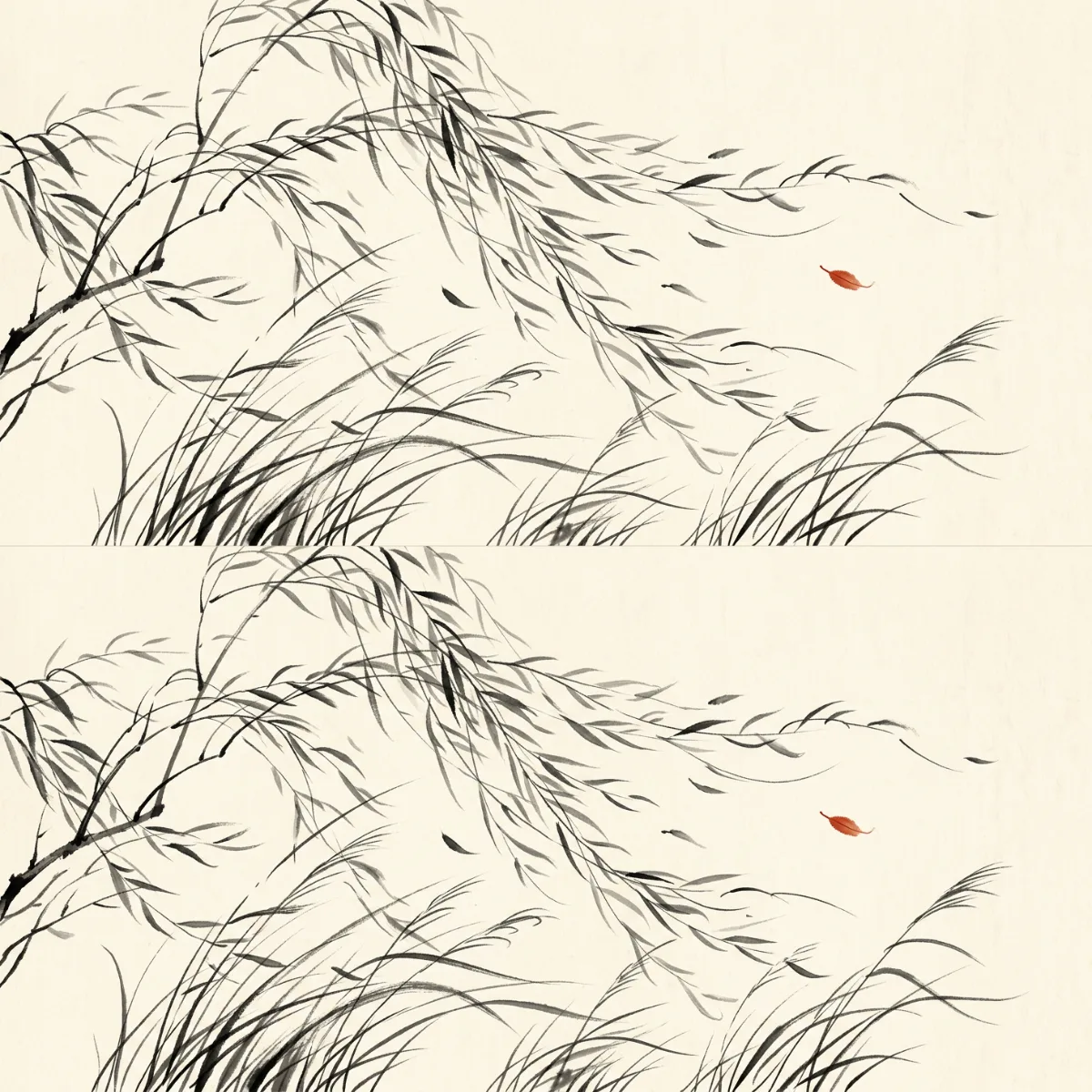 57. Gentleness巽 · XùnWhat truly penetrates here does so not by force, but by sustained gentleness.
Hexagram 57 (Gentleness) often shows up around wanting to influence someone without pushing, building influence gradually or realizing that forcing backfires. At its core: What truly penetrates here does so not by force, but by sustained gentleness.
Where this hexagram often fits.
Situations
- wanting to influence someone without pushing
- building influence gradually
- realizing that forcing backfires
- letting an idea seep in slowly
- gently persisting until it lands
- rolling out a change subtly
- being too accommodating and losing your direction
- applying or feeling quiet pressure
Questions people ask
- How do I get something done without forcing it?
- When is gentleness strength and when is it weakness?
- How do I keep influence without getting hard?
- How do I hold my direction while moving with others?
What is often at play
- patience
- doubt about your softness
- persistence
- uncertainty whether it's getting through
What this asks for
- sustained gentleness
- repetition with measure
- keeping a clear inner direction
- not pushing yet not yielding
Also searched as
- The Gentle
- Gentleness
- Subtle influence
- Penetration
- Soft persistence
- Yielding
- Wind
Core image
This hexagram is about influence that enters rather than breaks. The image is wind upon wind: not a blow that announces itself, but something that finds its way between everything because it keeps on. So this hexagram speaks of subtle working, gradual entry, and the power of a stance that need not be hard to truly take hold.
Tension
The tension lies in mistaking softness for weakness. Many people force, because force is the only thing they trust. But here the hard thing meets resistance where the soft thing finds a way in. At the same time it asks for discernment, because softness without direction simply drains away.
Distortion
Softness distorts when yielding goes slack, or when subtle influence turns into creeping pressure. Then the straight line is lost. What was meant to penetrate becomes either limp or manipulative.
Stance
Work with repetition, measure, and a clear inner direction. Do not push, but do not dodge what must be said or done either. Right softness here is no retreat from the world, but a precise way of entering it.
Closing line
What wants to work deep need not be loud, so long as it never strays from its line.
Plain-language entrances.
Plain-language entrances to this hexagram. They help with search and recognition, while the reading itself remains rooted in the text and your question.
Hexagram 57 - Gentleness
Hexagram 57 - Gentleness gives language to a recognisable I Ching pattern. Read the linked hexagram as the source, not as a separate interpretation.
Changing lines of hexagram 57
- Line 1. At the start the soft thing still moves uncertainly, and the risk of swaying back and forth is high. You feel the direction, but the ground beneath it isn't firm yet. This line asks for more inner line before reaching for any further influence.
- Line 2. Here the soft thing finds a truer center. The working grows more reliable, because it no longer comes from shyness. What penetrates now does so with straighter measure.
- Line 3. At this point softness turns impure through too much hedging. Wanting to enter without giving up position, you lose both at once. This line is severe on indecision dressed as gentleness.
- Line 4. Here subtle influence becomes effective by joining itself to right timing and concrete act. The soft thing gains teeth without turning hard. That makes the effect favorable.
- Line 5. This line shows grown softness: steadfast, clear, and at work without compulsion. No display of power is needed. That is exactly why the influence gains depth.
- Line 6. When the soft thing tips too far, it can turn into fawning, or into the loss of one's own core. Then nothing is truly entered anymore. This line warns against softness without a spine.
The form beneath hexagram 57
Derived from the structure of the I Ching — not an interpretation, but the shape underneath it. The reading above remains the source.
- Balance. Hexagram 57 is predominantly yang — 4 yang lines and 2 yin lines.
- Line pattern. From bottom to top: yin, yang, yang, yin, yang, yang.
- Movement. 63 possible paths of change run from this image — every combination of moving lines leads to a different hexagram.
Built from
Hexagram 57 is built from two trigrams, the natural forces of the I Ching.
Related hexagrams
Sources & reading
Our text is our own, ratified reading of the canonical I Ching — source → human → pattern → fitting movement. It is not a reproduction of the translations above, and not prediction, psychology, or new-age. The reference translations serve to calibrate; protected prose is not taken over.
- Richard Wilhelm / Cary F. Baynes — The I Ching or Book of Changes. symbolic-philosophical, with the Ten Wings — the most influential Western edition.
- James Legge — The Yî King (Sacred Books of the East). scholarly-philological (public domain).
Read what is in motion in your situation.
A hexagram only takes on meaning in relation to your own question. Ask one and read what appears.