
53. Gradual Growth
Gradual Growth is hexagram 53 of the 64 in the I Ching, also known as the Book of Changes (in Chinese Jiàn, 漸).
Also known as: Development.
What wants to arrive and last gets further here only by growing slowly and in keeping.
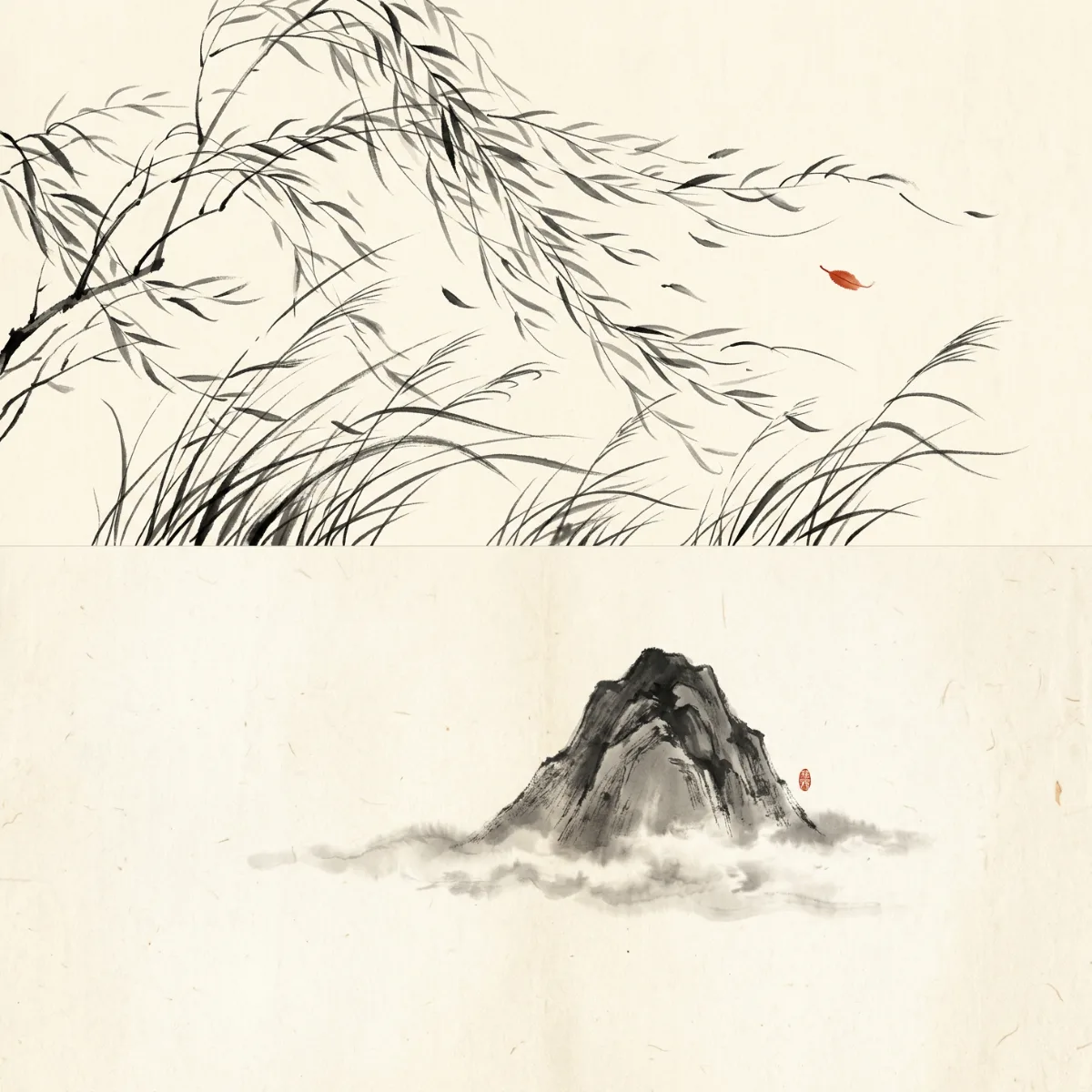 53. Gradual Growth漸 · JiànWhat wants to arrive and last gets further here only by growing slowly and in keeping.
Hexagram 53 (Gradual Growth) often shows up around growing toward something slowly, building something lasting with patience or moving forward step by step. At its core: What wants to arrive and last gets further here only by growing slowly and in keeping.
Where this hexagram often fits.
Situations
- growing toward something slowly
- building something lasting with patience
- moving forward step by step
- feeling impatient about slow progress
- letting something ripen at its own pace
- a development that can't be rushed
- trusting that growth takes time
- keeping the right sequence
Questions people ask
- Is this slow development actually going somewhere?
- How do I stay patient while it moves slowly?
- Can I force this or does it need to ripen?
- What needs time to truly take hold?
What is often at play
- impatience
- doubt about where it's heading
- craving for speed
- calm
What this asks for
- trusting the ripening
- letting each step settle
- letting go of haste
- respecting the pace
Also searched as
- Development
- Gradual growth
- Ripening
- Slow growth
- Steady development
- Maturation
- Step by step
Core image
This hexagram is slow development that earns its place over time. The image is a tree on the mountain: growth you can see, but never hurried. So this is about a becoming that turns reliable only when each step can settle into ground that fits it.
Tension
The tension is impatience. You want to know the movement is really going somewhere, so you look for signs of speed. But this hexagram refuses haste as proof of life. It trusts a ripening that gains weight precisely through its slowness.
Distortion
Gradual growth distorts when slowness is mistaken for limpness, or when the natural order is forced to move faster than it can. Then development goes either slack or strained. Either way it loses what held it up.
Stance
Stay with the right order of growth. Let each step find ground before the next is taken. What takes shape here should not impress; it should hold. Right gradualness is not a lack of nerve, but respect for becoming.
Closing line
Whoever wants to arrive too soon often leaves behind the very thing the arrival was meant to carry.
Plain-language entrances.
Plain-language entrances to this hexagram. They help with search and recognition, while the reading itself remains rooted in the text and your question.
Hexagram 53 - Gradual Growth
Hexagram 53 - Gradual Growth gives language to a recognisable I Ching pattern. Read the linked hexagram as the source, not as a separate interpretation.
Changing lines of hexagram 53
- Line 1. At the start the growth is still tender and exposed. There is little shelter and even less proof. The line asks for care without timidity.
- Line 2. Here the movement finds a steadier middle ground. Nothing is finished, but there is enough footing now not to keep slipping back. That makes further growth more believable.
- Line 3. At this point you risk a step faster than the ground allows. Restlessness and skew follow. This line asks for a return to order in the advance.
- Line 4. Here the growth finds a truer place, and with it more staying power. You need not be widely visible to become solid. The shape begins to bear more reliably.
- Line 5. This line shows a ripening development that holds its course through hardship. There is delay, but no break in essence. So the growth gains gravity.
- Line 6. When the development reaches its full shape, it carries radiance without shouting itself down. What has grown turns out to give direction to others too. This line holds the dignity of a late ripeness.
The form beneath hexagram 53
Derived from the structure of the I Ching — not an interpretation, but the shape underneath it. The reading above remains the source.
- Balance. Hexagram 53 is in full balance — 3 yang lines and 3 yin lines.
- Line pattern. From bottom to top: yin, yin, yang, yin, yang, yang.
- Movement. 63 possible paths of change run from this image — every combination of moving lines leads to a different hexagram.
Built from
Hexagram 53 is built from two trigrams, the natural forces of the I Ching.
Related hexagrams
Sources & reading
Our text is our own, ratified reading of the canonical I Ching — source → human → pattern → fitting movement. It is not a reproduction of the translations above, and not prediction, psychology, or new-age. The reference translations serve to calibrate; protected prose is not taken over.
- Richard Wilhelm / Cary F. Baynes — The I Ching or Book of Changes. symbolic-philosophical, with the Ten Wings — the most influential Western edition.
- James Legge — The Yî King (Sacred Books of the East). scholarly-philological (public domain).
Read what is in motion in your situation.
A hexagram only takes on meaning in relation to your own question. Ask one and read what appears.