
52. Holding Still
Holding Still is hexagram 52 of the 64 in the I Ching, also known as the Book of Changes (in Chinese Gèn, 艮).
Also known as: Keeping Still.
Not every movement deserves completion; sometimes holding still is the last right act.
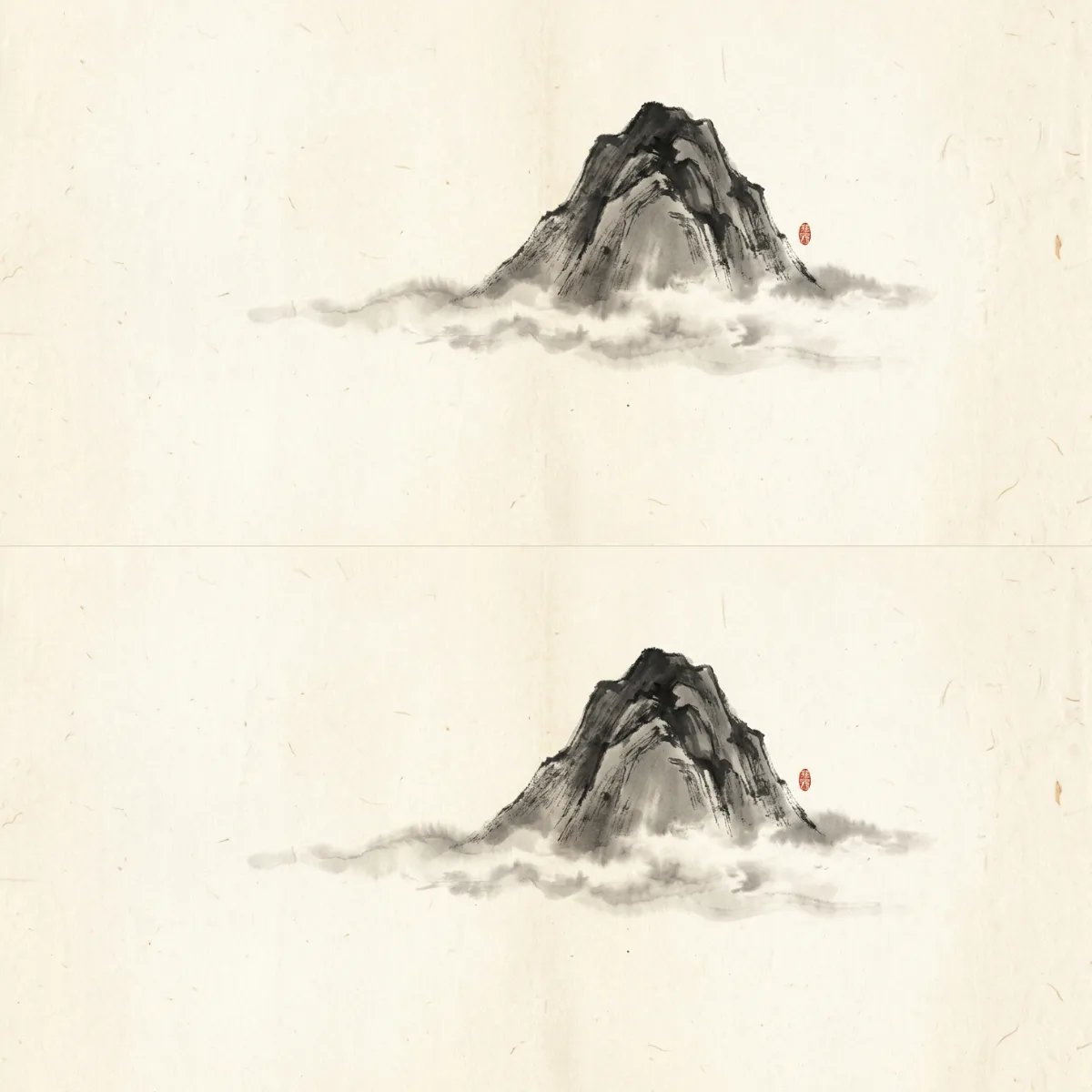 52. Holding Still艮 · GènNot every movement deserves completion; sometimes holding still is the last right act.
Hexagram 52 (Holding Still) often shows up around coming to a full stop, settling down and grounding or knowing when to quit. At its core: Not every movement deserves completion; sometimes holding still is the last right act.
Where this hexagram often fits.
Situations
- coming to a full stop
- settling down and grounding
- knowing when to quit
- not finishing everything you started
- containing inner restlessness
- standing still without running away inside
- letting go of the urge to keep going
- doing nothing for a moment and just observing
Questions people ask
- When is stopping wiser than pushing on?
- How do I find calm without shutting myself off?
- What deserves to be finished and what doesn't?
- How do I stay awake in the stillness?
What is often at play
- restlessness
- urge to keep going
- fear of stillness
- agitation
What this asks for
- staying collected
- stopping where stopping is right
- staying present in the stillness
- precision instead of escape
Also searched as
- Holding Still
- Keeping Still
- Stillness
- Coming to rest
- Setting limits
- Grounding
- Stopping
Core image
This hexagram is mountain upon mountain: a stillness that is not dead but awake. It is not about passivity, but about the power to stop somewhere without inwardly walking off. Body, will, and attention are not driven on here, but bounded. Inside that boundary a different clarity comes through.
Tension
For many, stopping feels like the loss of momentum, influence, or self. People would rather move wrongly than truly come to rest. So this hexagram is strict: not everything in you that wants to go on deserves completion. There are moments when going on is not brave but deaf.
Distortion
Holding still distorts when it hardens into rigidity. Then someone shuts down and calls it calm. Real stillness still lets perception in; rigidity goes blind.
Stance
Stay gathered and measured. Stop where stopping is true, not where fear disguises itself as wisdom. Let go of what no longer deserves to move, but stay present in what still has to be felt. Holding still is a form of precision here, not a way out.
Closing line
Whoever stops at the right moment saves more than their own rest.
Plain-language entrances.
Plain-language entrances to this hexagram. They help with search and recognition, while the reading itself remains rooted in the text and your question.
Hexagram 52 - Holding Still
Hexagram 52 - Holding Still gives language to a recognisable I Ching pattern. Read the linked hexagram as the source, not as a separate interpretation.
Changing lines of hexagram 52
- Line 1. At the start, holding still is still fairly easy. The movement is in the feet, not yet in the heart. Bound here what will be far harder to stop later on.
- Line 2. Here the urge has come closer and the boundary grows harder to hold. You watch something carry on that you can no longer simply call back. Keep your own line, even when another won't stop.
- Line 3. This line shows forced braking. The will is still hot but gets shoved back hard. That turns bitter; here holding still has to grow cleaner than suppression.
- Line 4. At this point the stillness grows more aware and less reactive. What was only braking before takes on shape and measure. You need not stop everything; only what should not go on.
- Line 5. Here holding still becomes skilled. Words grow spare, movements sober, presence clear. The boundary no longer works as a wall but as a shape.
- Line 6. When holding still ripens fully, what comes is not dryness but freedom. Then the end of movement does not hurt, because nothing is left to clutch. This line carries a great rest without loss of self.
The form beneath hexagram 52
Derived from the structure of the I Ching — not an interpretation, but the shape underneath it. The reading above remains the source.
- Balance. Hexagram 52 is predominantly yin — 4 yin lines and 2 yang lines.
- Line pattern. From bottom to top: yin, yin, yang, yin, yin, yang.
- Movement. 63 possible paths of change run from this image — every combination of moving lines leads to a different hexagram.
Built from
Hexagram 52 is built from two trigrams, the natural forces of the I Ching.
Related hexagrams
Sources & reading
Our text is our own, ratified reading of the canonical I Ching — source → human → pattern → fitting movement. It is not a reproduction of the translations above, and not prediction, psychology, or new-age. The reference translations serve to calibrate; protected prose is not taken over.
- Richard Wilhelm / Cary F. Baynes — The I Ching or Book of Changes. symbolic-philosophical, with the Ten Wings — the most influential Western edition.
- James Legge — The Yî King (Sacred Books of the East). scholarly-philological (public domain).
Read what is in motion in your situation.
A hexagram only takes on meaning in relation to your own question. Ask one and read what appears.