
31. Resonance
Resonance is hexagram 31 of the 64 in the I Ching, also known as the Book of Changes (in Chinese Xián, 咸).
Also known as: Influence.
What truly moves you does not force; it moves because it enters.
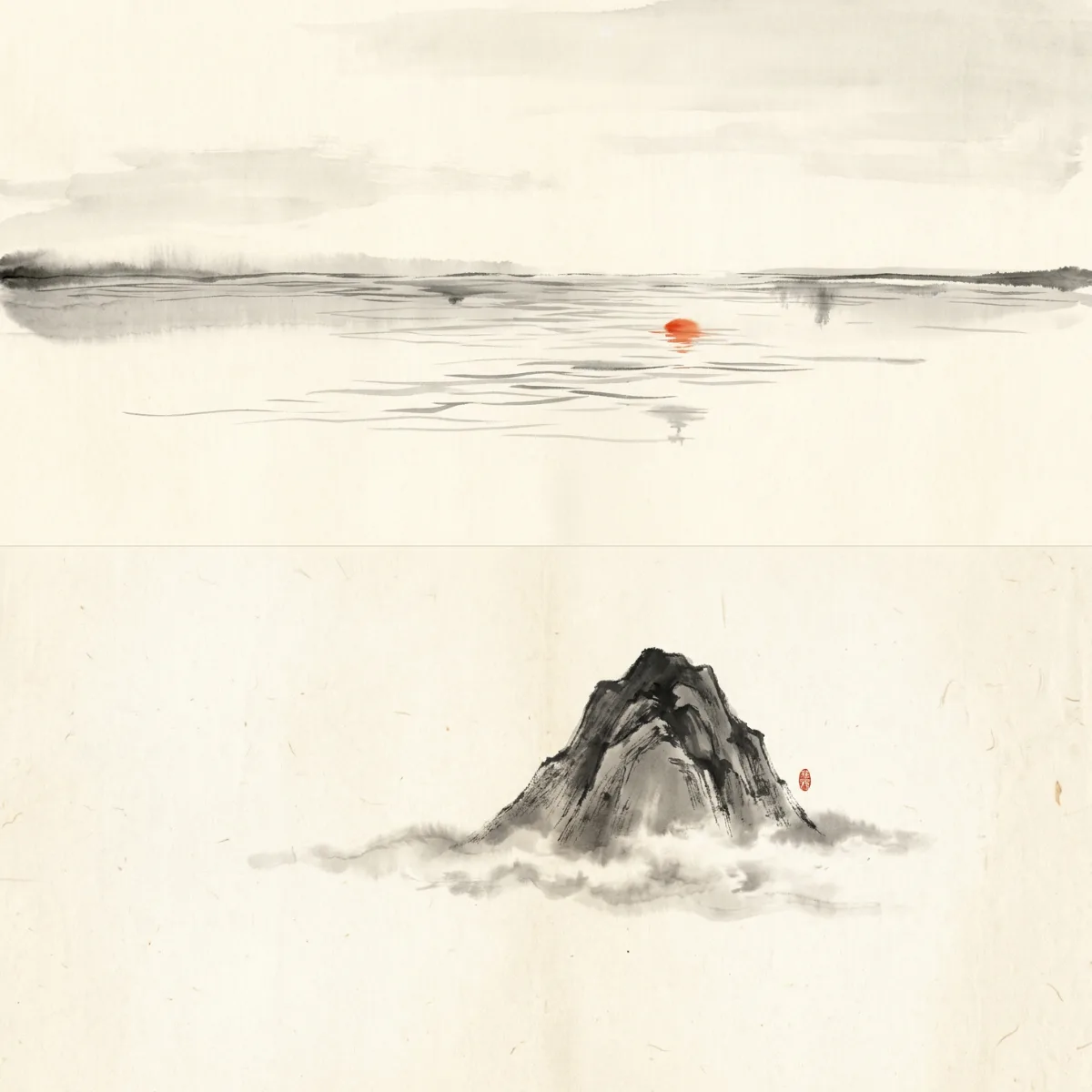 31. Resonance咸 · XiánWhat truly moves you does not force; it moves because it enters.
Hexagram 31 (Resonance) often shows up around drawn to someone, feeling a mutual attraction or unsure if it's real or just attraction. At its core: What truly moves you does not force; it moves because it enters.
Where this hexagram often fits.
Situations
- drawn to someone
- feeling a mutual attraction
- unsure if it's real or just attraction
- wanting to touch without grabbing
- going along with a feeling too fast
- wanting to influence someone
- early infatuation
- feeling something stirring between us
Questions people ask
- Is this real connection or just attraction?
- How do I let myself be moved without losing myself?
- Am I going along with this feeling too fast?
- How do I influence without forcing anything?
What is often at play
- attraction
- desire
- eagerness
- receptivity
What this asks for
- stay receptive without giving yourself away
- fine discernment
- don't force it
- wait within the contact
Also searched as
- Influence
- Resonance
- Attraction
- Wooing
- Mutual Response
- Sensitivity
- Stimulation
Core image
This hexagram is about influence, attraction, mutual touch. What stands at the center is not the blunt push but the subtle motion by which one thing sets another trembling. No brute power works here. The strength lies in a receptivity that is not soft, and in a touch that does not seize.
Tension
The tension sits at the border between real influence and seduction. What touches can open, but it can also sweep away. So this hexagram asks for fine discernment. Not every pull deserves to be followed; not every holding-back is wise.
Distortion
Resonance distorts when someone tries to force it, or stages feeling to manufacture movement. Then the fineness of reciprocity disappears. What still touches now touches mostly through pressure.
Stance
Stay open without giving yourself away. Let yourself be moved where the motion is true, but do not act as if every tremor means destination. Good influence needs no force. It works because something answers in the right order.
Closing line
What enters deeply rarely has to tug at the surface.
Plain-language entrances.
Plain-language entrances to this hexagram. They help with search and recognition, while the reading itself remains rooted in the text and your question.
Hexagram 31 - Resonance
Hexagram 31 - Resonance gives language to a recognisable I Ching pattern. Read the linked hexagram as the source, not as a separate interpretation.
Changing lines of hexagram 31
- Line 1. At the start the influence is still slight, still low in the body. It is early and not yet decisive. Not every first tremor needs to be followed.
- Line 2. Here the motion already wants to go further, but the moment is not ripe. Whoever moves too soon now lets a feeling that has no shape yet pull them along. This line asks for waiting inside the touch.
- Line 3. At this point the influence grows restless and too eager. One wants to hold fast to what is still only moving. That leaves the line open to losing itself.
- Line 4. Here the influence grows purer as inner restlessness eases. One can be touched without grasping at once. That makes true reciprocity possible.
- Line 5. This line shows influence at a higher, quieter level. The motion is real, but not overwhelming. So it can hold without drama.
- Line 6. When influence lives only in words, a smile, a gesture at the surface, it has not rooted deeply enough. Then there seems to be much movement, but little is truly touched. This line warns of attraction without a core.
The form beneath hexagram 31
Derived from the structure of the I Ching — not an interpretation, but the shape underneath it. The reading above remains the source.
- Balance. Hexagram 31 is in full balance — 3 yang lines and 3 yin lines.
- Line pattern. From bottom to top: yin, yin, yang, yang, yang, yin.
- Movement. 63 possible paths of change run from this image — every combination of moving lines leads to a different hexagram.
Built from
Hexagram 31 is built from two trigrams, the natural forces of the I Ching.
Related hexagrams
Sources & reading
Our text is our own, ratified reading of the canonical I Ching — source → human → pattern → fitting movement. It is not a reproduction of the translations above, and not prediction, psychology, or new-age. The reference translations serve to calibrate; protected prose is not taken over.
- Richard Wilhelm / Cary F. Baynes — The I Ching or Book of Changes. symbolic-philosophical, with the Ten Wings — the most influential Western edition.
- James Legge — The Yî King (Sacred Books of the East). scholarly-philological (public domain).
Read what is in motion in your situation.
A hexagram only takes on meaning in relation to your own question. Ask one and read what appears.